

Child Development Research, Insights, and Science Briefs to Your Inbox
Key takeaways for caregivers
- In adoptive families, open communication about the adoption is linked to children’s emotional well-being.
- Many people focus only on one person’s perspective of how open this communication is within a family. To better understand the nuances of family dynamics and design targeted support programs for adoptive families, it is important to consider the perspectives of different family members.
- In our work, using a multi-informant approach, we found that adoptive mothers and fathers generally felt more comfortable, satisfied, and free when discussing adoption than did their adolescent adoptees.
- Mothers’ and fathers’ communication openness about adoption each played distinct roles in children’s development.
- Enrichment programs for adoptive families should promote open, responsive, and empathic dialogue between parents and children. Such programs will be most effective in promoting adoptees’ well-being if they involve both adoptive parents and children, and consider all family members’ perspectives.
This blog is based on research originally published in Ranieri, S., Zambelli, M., Ferrari, L., Tagliabue, S., Rosnati, R., & Brodzinsky, D. (2025). Measuring communication openness within adoptive families: The psychometric properties of the multi-informant Adoption Communication Openness Scale. International Journal of Behavioral Development, 49(1), 89-99.
Talking about adoption: A challenging family task
Adoptive families often have an ongoing challenge and opportunity to work together to make sense of their histories and identities, both individual and shared. They must decide how to manage disclosing facts about the child’s origin, birth parents, and pre-adoption history.

Photo by Pavel Danilyukm on Pexels
What is adoption communication openness?
The concept of adoption communication openness captures the family culture around these types of conversations, extending beyond the parents’ initial decisions about sharing information. As the adoptee grows up, adoption communication evolves into how the family navigates the child’s questions and interest in learning more.
Open adoption communication involves not just providing children with age-appropriate information in response to their questions, but addressing their thoughts and feelings in an emotionally caring way. It also involves parents sharing their own thoughts and feelings about the child’s history and current adoption experiences in an empathic and supportive manner.
But just how satisfied are family members in their level of comfort and discussion? When it comes to family members’ feelings and thoughts about adoption, do they feel understood and accepted by each other?
Open adoption communication and emotional attunement
Adoption communication openness is a collaborative, enduring family task grounded in emotional attunement – where parents and adoptive children participate in a thoughtful give and take of honest reflection and consideration of each other’s feelings.
Conversations about adoption can be difficult for some family members, especially if they have complex feelings about the birth family, the circumstances surrounding the adoption, and any pre-adoption trauma the child might have experienced.
That said, when families embrace an open and empathic approach to discussions about adoption, they help adopted children connect with their past. Families engaged in these open discussions also provide youth a sense of self-continuity. This sense of selfhelps youth navigate typical developmental changes. With this support, youth can create a coherent, well-integrated identity and adjust well to changes in their social and psychological experiences. A strong sense of self helps youth both during the growing-up years and as adoptees transition to adulthood.
Talking about adoption requires a family perspective
Because adoption communication is a joint endeavor, studying and working with adoptive families should involve a family-wide perspective.
In our research with Italian families, we approach adoption as a family transition that involves a pact among mothers, fathers, children, and the broader social context. (Italian law dictates that only heterosexual married couples can adopt children.) Based on this view, our studies integrate and compare perspectives of the children, mothers, and fathers in adoptive families.
This multi-informant approach moves beyond methods used in earlier studies on communication openness within adoptive families, which often relied on a single family member’s perception (typically the child’s). When we integrate different perspectives within adoptive families, a more complete picture of family relationships emerges.
Using the Adoption Communication Openness (ACO) Scale with Italian parents and children
As a part of our Group of European Adoption Researchers, we adapted a widely used, English-language self-report measure of communication openness in adoptive families –the Adoption Communication Openness (ACO) Scale, which we translated into Italian – to capture multiple perspectives:
- The child’s view of communication with their mother,
- The child’s view of communication with their father,
- The mother’s view of communication with their child, and
- The father’s view of communication with their child.
This multi-informant version of the ACO scale allows adopted children and their parents to express their own perceptions of openness in communication about adoption.
Valuable insights come from comparing parents’ and children’s perspectives
Generally speaking, evidence suggests that family members often have different perceptions of their relationships, with parents perceiving a more favorable picture than do their children. When we studied families’ adoption communication openness using our multi-informant approach, we found evidence of this generational discrepancy between parents and their adolescent children.
Our research studied 134 Italian families with adopted 13- to 17-year-olds. The children were adopted internationally from Asia (35%), Eastern Europe (35%), Latin America (24%), and Africa (6%).
All parents were White, whereas most of the adolescents were of a different racial/ethnic background. In addition, most of the adoptees were in institutional care before adoption and consequently had one or more pre-placement experiences of trauma and deprivation.
Adoptees find it harder to talk about adoption
While adoptive mothers and fathers reported similar perceptions of adoption communication, their perceptions differed from those of their children. Parents were more comfortable, satisfied, and free in discussing adoption with their children than their children were in discussing adoption with them.
The adoptees reported more difficulties sharing their thoughts and feelings about their adoptive history with their parents and wanted more open communication than they believed existed in their family. These results illustrate the importance of gathering multiple perspectives on adoption communication openness within a relationship.
Exploring unique ways that adoption communication openness with mothers and fathers relates to children’s well-being
Among researchers and in pop culture, interest is growing in investigating the unique contributions of mothers and fathers in children’s development, in general, and the world of adoptive families is no exception.
Children’s psychological functioning was better when they experienced open communication with their fathers
In earlier work, we found strong support for unique effects of maternal and paternal relationships on children’s well-being. For instance, in previous research we studied patterns of adoption communication openness in 160 Italian families with international 15- to 24-year-old adoptees who were born in Latin America (75%), Eastern Europe (12%), Africa (8%), or Asia (5%).
Fathers’ adoption communication openness, as perceived by their children, was more crucial in promoting adoptees’ positive psychological functioning than mothers’ adoption communication openness, specifically in terms of self-acceptance, autonomy, personal growth, purpose in life, and positive relations with others.
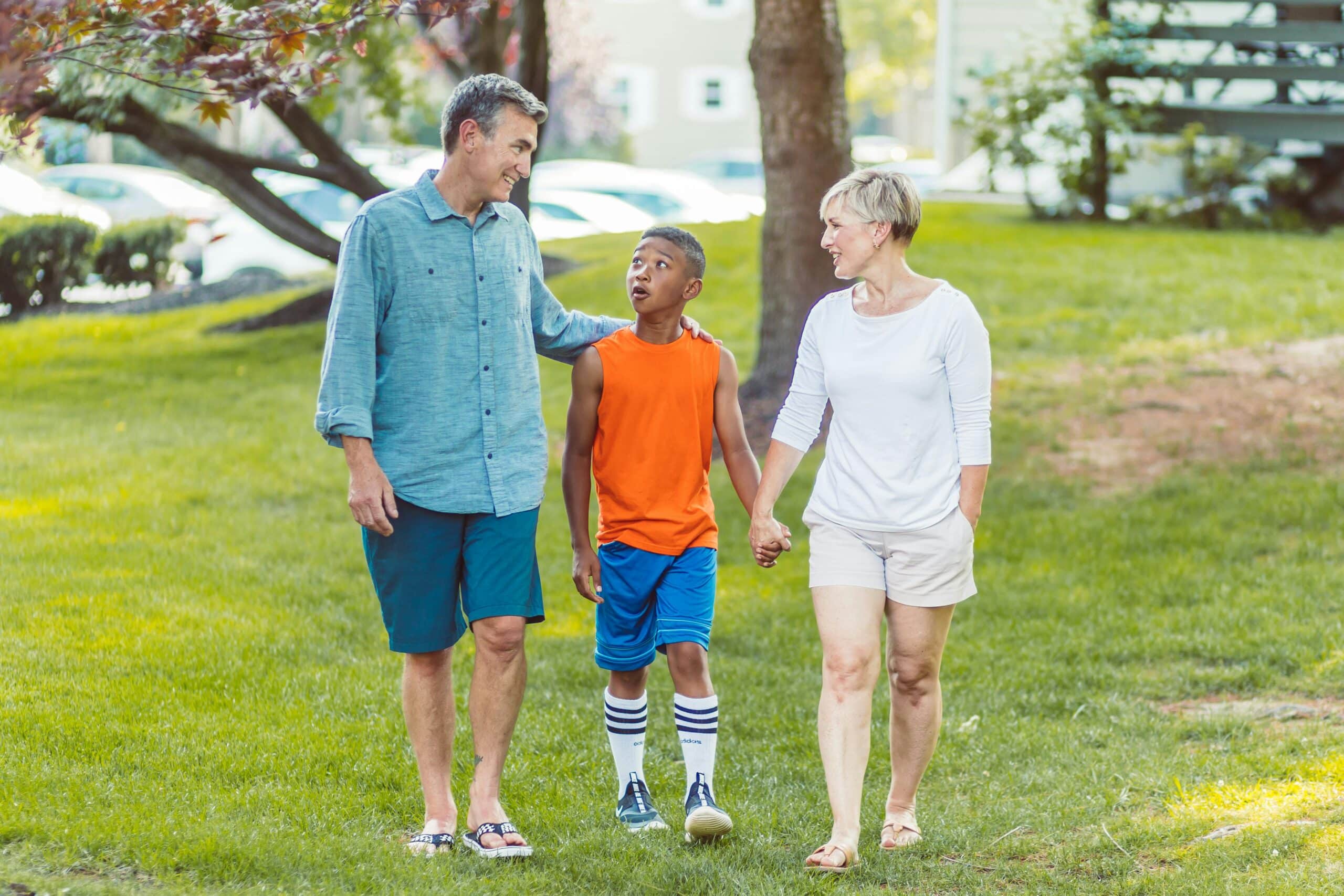
Photo by RDNE Stock project on Pexels
Mothers’ and fathers’ openness to communication related differently to adolescents’ outcomes
In other research, we studied 105 Italian adopted 13- to 17-year-olds who had been internationally adopted from Eastern Europe (37%), Asia (35%), Latin America (23%), and Africa (5%), who completed the ACO self-report questionnaire. Adopted children’s perception of high levels of maternal and paternal adoption communication openness related differently to outcomes in adolescence.
Adolescents who felt freer to discuss adoption-related issues with their mothers were more likely to report that being adopted was important to their identity and to report greater satisfaction with both their present life and their future possibilities.
The pattern was somewhat different for relations between adolescents’ perception of their fathers’ openness to communication and adoptees’ well-being. Feeling comfortable discussing adoption with their father was directly and positively linked only with adolescents’ future life satisfaction.
Perceived paternal openness to adoption communication may help adolescents think about their future and feel comfortable with their ongoing projects and opportunities. These results highlight that nuances in family-related communication about adoption become clearer when gathering perspectives of openness among different family members.
Establishing the ACO scale as a strong measure capturing the perspectives of different family members
Given the importance of understanding adoption communication in adoptive families and how open communication relates to children’s well-being, it is essential for measurement tools to accurately and reliably capture each family member’s perception of this complex psychological construct. Therefore, we recently worked to verify that the multi-informant ACO scale is an accurate measure that reflects the different perspectives clearly.
The scale was administered to more than 300 Italian families with internationally adopted 12- to 18-year-olds (about half females and half males) and their 40- to 65-year-old parents. At the time of adoption, children ranged from two months old to about 16 years old; most (67%) came to Italy from Asia, Latin America, and Africa, with others (33%) coming from Eastern Europe.
Analyzing family members’ responses on the ACO scale
Family members’ responses on the ACO were subjected to robust statistical methods to analyze the reliability and validity of the four versions of the scale: the child’s separate view of communication with their mother and father, the mother’s view of communication with their child, and the father’s view of communication with their child. Although a few items of the scale were discarded because they were judged to be of poor quality, the remainder were retained.
- The final version of the ACO scale, in all four variations, demonstrated acceptable reliability and validity as a measure of each family member’s perception of communication openness about adoption. Specifically, our evidence proved that:
The ACO scale captures adolescents’ views of both their mothers and their fathers; - The ACO scale captures the two different perspectives within the mother-child and father-child pairings;
- Results from the ACO scale were related in predictable ways to perceptions from family members’ reports on other family dynamics (e.g., higher levels of adoption communication openness were linked to greater frequencies of family members asking each other for help and greater parental knowledge of various aspects of their children’s lives, such as friends and activities); and
- Findings from the ACO scale were related in predictable ways to family members’ reports of the child’s emotional and behavioral health (e.g., family members who reported higher levels of adoption communication openness also reported fewer emotional and behavioral problems of the adolescents, such as problems with peer relationships and behaving inappropriately in various situations).
Benefits of using the ACO scale to evaluate different perspectives
This validated and reliable multi-informant tool allowed us to consider both similarities and differences in how each family member perceived communication openness. While these initial findings are based on Italian families with internationally adopted adolescents, researchers could adapt the multi-informant ACO scale for use in different cultural contexts, other types of adoption, and throughout the life cycle, broadening its applicability and impact.
Our tool will be helpful as researchers continue to explore the role of adoption communication openness in children’s development. Meanwhile, what do insights from our completed studies mean for today’s families?
Recommendations for adoptive families
Despite the recognition of adoption communication openness as a promising ingredient for supporting adoptees’ healthy development, few studies have explored how to facilitate such openness regarding adoption.
In our study of 134 Italian families – mothers, fathers, and their internationally adopted adolescents – we identified some components of the family context that can contribute to these supportive dynamics.
Having a shared family climate in which all members of the family experience high levels of closeness, trust, and open dialogue can help. In such an environment, sharing feelings and thoughts about adoption is enhanced, and adolescents report fewer emotional and behavioral difficulties.

Photo by Kindel Media on Pexels
Overall, our findings from more than a decade of scientific research have confirmed that communication openness is an important factor that relates to adoptive families’ internal dynamics and adopted adolescents’ healthy development.
When adoptees and their parents build bridges between the past and the present and foster open communication with each other, that dynamic can support adoptees’ positive feelings about their adoption and enable them to look forward confidently to the road ahead.
4 tips for talking about adoption
Our findings offer practical suggestions about adoption communication openness that may help adoptive parents, other caregivers, and the communities supporting them. We recommend that stakeholders:
1. Embrace a family perspective
Embrace a family perspective because adopted children and their parents may share similarities but also differ in their perceptions of adoption communication openness. Considering all individual perspectives provides a more comprehensive picture of family relationships and their associations with adoptees’ development.
This approach can also help “normalize” different perceptions, supporting the value of each person’s unique adoption experience, and promoting the co-construction of a positive family environment in which all family members feel understood, respected, and supported.
2. Make room for every perspective
Incorporate this family perspective into intervention efforts by ensuring that each individual’s voice is heard.
3. Understand how mothers and fathers support adopted children differently
Recognize that mothers and fathers play unique roles as “meaning makers” for their children. By helping children make sense of complex situations and giving value to their personal history, each parent can find ways to support adopted children’s process of connecting the past to the present and the future.
4. Encourage mutual trust and caring in your adoptive family
Promote a family climate that features mutual trust, aid, sharing, and general caring. This overall dynamic may foster an open, responsive, and empathic dialogue about adoption within the family context, as well as within the wider social context, that benefits adoptees’ development.
References
- Aramburu Alegret, I., Pérez-Testor, C., Mercadal Rotger, J., Salamero Baró, M., Davins Pujols, M., Mirabent Junyent, V., Aznar Martínez, B., & Brodzinsky, D. (2020). Influence of communicative openness on the psychological adjustment of internationally adopted adolescents. Journal of Research on Adolescence, 30(S1), 226–237.
- Brodzinsky, D. (2006). Family structural openness and communication openness as predictors in the adjustment of adopted children. Adoption Quarterly, 9(4), 1–18.
- Brodzinsky, D., Gunnar, M., & Palacios, J. (2022). Adoption and trauma: Risks, recovery, and the lived experience of adoption. Child abuse & neglect, 130, 105309.
- Cigoli, V., & Scabini, E. (2006). Family identity. Ties, symbols, and transitions. Lawrence Erlbaum Associates.
- Colaner, C. W., & Soliz, J. (2017). A communication-based approach to adoptive identity: Theoretical and empirical support. Communication Research, 44(5), 611–637.
- Ferrari, L., Ranieri, S., Barni, D., & Rosnati, R. (2015). Parent-child relationship and adoptees’ psychological well-being in adolescence and emerging adulthood: Disentangling maternal and paternal contribution. Family Science, 6(1), 77–86.
- Greco, O., Rosnati, R., & Ferrari, L. (2015). Adult adoptees as partners and parents: The joint task of revisiting the adoption history. Adoption Quarterly, 18(1), 25–44.
- Grotevant, H. D., Rueter, M., Von Korff, L., & Gonzalez, C. (2011). Post‐adoption contact, adoption communicative openness, and satisfaction with contact as predictors of externalizing behavior in adolescence and emerging adulthood. Journal of Child Psychology and Psychiatry, 52(2), 529–536.
- Grotevant, H. D., Rueter, M., Von Korff, L., & Gonzalez, C. (2011). Post‐adoption contact, adoption communicative openness, and satisfaction with contact as predictors of externalizing behavior in adolescence and emerging adulthood. Journal of Child Psychology and Psychiatry, 52(2), 529–536.
- Ranieri, S., Ferrari, L., Rosnati, R., Danioni, F. V., Canzi, E., & Miller, L. (2022). The mediating role of adoption communication openness between family functioning and the adjustment of adopted adolescents: A multi-informant approach. Journal of Family Communication, 22(3), 193–207.
- Ranieri, S., Zambelli, M., Ferrari, L., Tagliabue, S., Rosnati, R., & Brodzinsky, D. (2025). Measuring communication openness within adoptive families: The psychometric properties of the multi-informant Adoption Communication Openness Scale. International Journal of Behavioral Development (Method & Measures section), 49(1), 89–99.
- Rosnati, R., & Iafrate, R. (2023). Psicologia dell'adozione e dell'affido familiare (Vol. 2023). Vita e Pensiero.
- Scabini, E., Marta, E., & Lanz, M. (2006). Transition to adulthood and family relations: An intergenerational perspective. Psychology Press.